
When a Phoenix company calls a consultant from BusinessGrowthHacker.com, they are not looking for general business advice, they need specific solutions to deeply rooted problems. Think of a business growth consultant not as a cheerleading coach, but as an expert mechanic for your company’s systems. You bring your car in because it is making a strange noise and losing power.
The mechanic does not tell you to drive better; they open the hood, find the faulty part, and fix it. That is the philosophy behind the businessgrowthhacker.com phoenix business growth consultant approach. They focus on finding the bottlenecks, optimizing systems, and maximizing efficiency using a highly developed toolbox of skills.
This involves specific strategies that address current Phoenix market challenges like the talent shortage, rising operational costs, and the need for better technology adoption. They use data and specific action plans to ensure that every effort your business makes results in a measurable return.
Developing Your Business Road Map: Growth Strategy First Looks
The foundation of any successful growth project is a crystal-clear understanding of the starting point, the destination, and the most efficient route between them. Before any campaigns launch or software is implemented, the consultant must first build a detailed business road map.
This road map is not just a wish list; it is a highly calculated strategy document designed to mitigate risk and accelerate expansion.
The initial step focuses on defining precisely who you serve. This is where the concept of the Ideal Customer Profile (ICP) comes into play. Many Phoenix businesses try to sell to everyone, which often means they end up selling effectively to no one. The consultant helps you narrow your focus by asking sharp questions:
- What are the specific pain points your product or service solves?
- Which demographic groups are most willing and able to pay for your solution?
- Where do your most profitable customers spend their time, both online and locally in Arizona?
Once the ICP is defined, creating a clear game plan for reaching them becomes much simpler. The strategy shifts from general marketing efforts to targeted campaigns that speak directly to the ideal customer’s needs and interests. The consultant designs the pathways, detailing which channels to use, what message to deliver, and the exact steps a prospect should take to become a customer. This clarity prevents wasted marketing dollars and ensures alignment across sales and operations teams.

Photo by Markus Winkler
Fixing Leaks: Optimizing Your Sales Funnel for Better Results
You can think of your business’s sales process as a sales funnel, which is simply a well-organized path leading a potential customer toward a purchase. At the wide top of the funnel, you have many prospects who are barely aware of your brand. As they move down, they become interested and consider various options, finally reaching the narrow bottom where a decision is made and the sale occurs.
However, most funnels have leaks. Potential customers will inevitably drop off at various stages, but these drop-offs often indicate systematic failures that can be fixed. This is where the consultant acts as a plumber, thoroughly inspecting every connection.
They use tools to track customer behavior and identify exactly where prospects are falling out of the path. Are customers leaving your website after reading the services page? Are they abandoning their shopping cart before checkout?
A businessgrowthhacker.com phoenix business growth consultant focuses intensely on optimization by implementing specific fixes:
- Awareness Stage Fixes: Refining messaging to better attract the ICP, ensuring marketing channels (like social media or local Phoenix advertising) deliver high-quality traffic to the top of the funnel.
- Interest Stage Optimization: Improving the content (e.g., blog posts, guides) that engages prospects. This content must be valuable enough to keep them moving forward, perhaps by making your solution look like the obvious choice.
- Decision Stage Refinements: Simplifying the evaluation process. This might involve clear pricing structures, highly persuasive case studies, or easy access to product demonstrations.
- Action Stage Improvements: Fixing the friction points in the checkout or contact process. Even minor issues, like too many required form fields, can cause prospects to abandon a near-sale.
By diligently analyzing the data, the consultant implements strategic changes to save those near-sales. Interested in learning more about how these crucial optimizations work? Check out a detailed overview on Sales Funnel Optimization: 10 Strategies for More .to understand the core strategies involved in keeping prospects engaged from start to finish. Finding and fixing these leaks dramatically increases conversion rates without requiring an increase in marketing spending.
Advanced Growth Techniques: How Data Drives Success with Your Consultant
Once the basic framework of your strategy and sales funnel is solid, the real growth acceleration begins. This is where a businessgrowthhacker.com phoenix business growth consultant relies heavily on data and technology to fine-tune operations.
They move beyond simple fixes to implement advanced techniques that turn slow, expensive processes into fast, cost-effective drivers of revenue. These tactics focus on the measurable aspects of your marketing, ensuring every click and every dollar spent contributes directly to your bottom line.
Success in the Phoenix market often depends on superior digital execution, which means treating your online presence not just as a brochure, but as a performance engine.
Making Your Website a 24/7 Sales Machine Online
Your website is arguably your most important asset. It does not take vacations or sleep; it should be working constantly to bring in new business. However, many local Phoenix websites are designed for looks, not for conversion. Conversion optimization (CRO) is the process of making sure that when a visitor arrives, they clearly know what action to take next and are highly motivated to take it.
A consultant looks at your site and immediately diagnoses friction points that stop visitors from becoming customers. This often involves detailed analysis of where users click, where they hesitate, and what content causes them to leave.
Here are key elements a consultant focuses on to maximize your site’s conversion power:
- Clear Calls to Action (CTAs): These are the buttons or links that guide users. They must be prominent, persuasive, and tell the user exactly what will happen next, whether it is “Request a Free Quote” or “Buy Now and Save.”
- Simplified Navigation: Visitors should find what they need in three clicks or less. If your site is confusing, people get frustrated and go to a competitor.
- Mobile Responsiveness: Given the high use of mobile devices in Arizona, the site must function perfectly on a smartphone or tablet. Poor mobile experience is a guaranteed way to lose potential customers.
- Eliminating Distraction: Every element on the page should serve a purpose. Removing unnecessary animations, confusing jargon, or excessive links focuses the visitor on the transaction.
By applying these data-driven changes, the consultant transforms your website from a passive resource into an active sales team member. Learn more about making these changes effective with this guide on Conversion Optimization for Small Business Website in 2025. Remember, small improvements in your conversion rate can lead to massive increases in profit over time.
Getting Found on Google: SEO Boosts for the Valley of the Sun
It does not matter how perfect your website is if nobody can find it. Search Engine Optimization (SEO) is the underlying strategy that ensures local people searching for services in Phoenix or Scottsdale find your company first. Think of SEO as making sure your business sign is placed prominently on the busiest digital intersection in the area.
A good SEO plan is especially powerful because it attracts customers who are already urgently looking for what you offer. When a homeowner in Tempe searches for “AC repair near me,” they are ready to buy. Your businessgrowthhacker.com phoenix business growth consultant implements focused strategies to capture this high-intent traffic.
The consultant zeros in on specifics relevant to the Phoenix metro area:
- Local Keyword Targeting: Focusing on keywords that include city names, neighborhoods, or local phrases (e.g., “Phoenix plumbing services” or “best Scottsdale dentist”).
- Google My Business (GMB) Optimization: Ensuring your GMB profile is complete, accurate, and regularly updated with posts and photos. This is the single most important tool for local visibility.
- Local Link Building: Acquiring links and mentions from reputable local Phoenix websites or chambers of commerce, which signals to Google that your business is a valuable part of the local community.
- Content for Local Solutions: Creating valuable online content that directly answers questions specific to the Arizona market, such as guides on dealing with monsoon season damage or tips for desert landscaping.
This targeted approach ensures you are not wasting time trying to rank nationally, but instead dominating searches right here in the Valley of the Sun. This attracts customers who live just down the street. It is the cheapest and most effective way to fill the top of your sales funnel with qualified local leads.
Smart Spending: Improving Your Online Ad Campaigns
Many businesses try online advertising, but few do it efficiently. They may spend thousands of dollars on pay-per-click (PPC) or social media ads only to see minimal or zero return. Running ads without a clear strategy is like dumping water into a leaky bucket (the sales funnel you fixed earlier). Ads can be incredibly costly if they are not managed by data and constant testing.
The consultant’s role here is to act as a financial auditor for your ad spending. They ensure that every dollar invested brings back more than a dollar in revenue, aiming for a high Return on Ad Spend (ROAS).
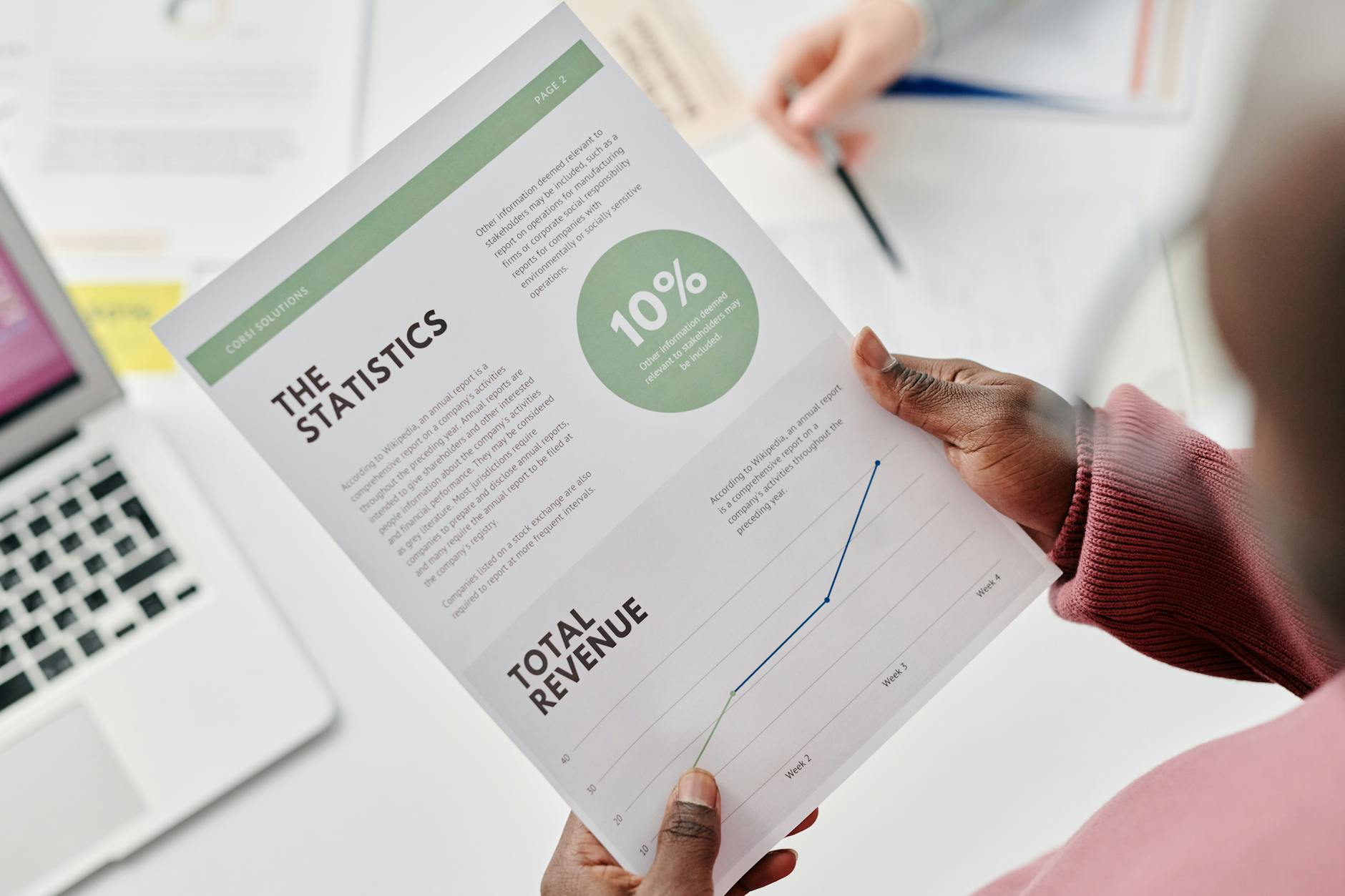
Photo by Tiger Lily
The key difference lies in the discipline of A/B Testing and Refinement. The consultant does not guess what headline works best or which audience converts; they test it. They run two versions of an ad, measure the immediate results, discard the poor performer, and iterate rapidly.
This improvement process focuses on three main areas:
- Precision Targeting: Instead of showing ads to everyone in Phoenix, the consultant refines targeting to reach only the Ideal Customer Profile (ICP). This dramatically cuts wasted impressions and increases the likelihood of a conversion.
- Ad Creative Optimization: Testing different offers, imagery, and messaging to see what compels the target audience to click. Ads must speak directly to the local customer’s immediate need.
- Landing Page Alignment: Ensuring the landing page a user hits after clicking an ad perfectly matches the ad’s message and offer. Mismatching the ad and landing page is one of the most common reasons for high drop-off and wasted ad spend.
This data-driven approach to advertising ensures your budget is working as hard as possible. It moves the business from hopeful spending to predictive and profitable investment.
Beyond Marketing: Systems and Automation for Long Term Control
Once your marketing campaigns are optimized and bringing in fresh prospects, the focus shifts internally. True scaling is not just about finding new customers; it is about building an internal machine that can handle the increased volume efficiently and profitably.
A businessgrowthhacker.com phoenix business growth consultant helps local companies look past the immediate sale and install robust systems. These systems ensure that every customer receives consistent, high-quality service, which reduces turnover and allows the business to grow predictably without becoming overwhelmed by chaos.
Letting Technology Do the Heavy Lifting Through Automation
Many small business owners spend hours every week on tasks that are repetitive, boring, and easily handled by a computer. Think about scheduling social media posts, sending out standard follow-up emails, or moving customer details from one spreadsheet to another. Automating these small, everyday tasks is one of the fastest ways to inject efficiency into a company.
The consultant helps you identify high-volume, low-value work and replace it with automated workflows. This is like getting extra hours in your day, allowing owners and staff to concentrate only on big growth activities, such as:
- Deepening customer relationships: Having meaningful conversations.
- Developing new products or services: Focusing on innovation.
- Strategic planning: Figuring out the next major market move.
When a computer handles the small chores, you gain several key advantages for your Phoenix business. Computers follow instructions perfectly every time, which means fewer mistakes in data entry and customer communication. This accuracy is vital for maintaining customer trust and ensuring accurate financial records. Automating tasks also means your business can handle much more work. If your orders double, an automated system can process the volume without requiring immediate new hires or causing team burnout.
Consider how simple automated processes save time:
- Automatic Invoicing: Software prepares and sends invoices immediately after service completion, ensuring faster payment.
- Lead Follow-Up: Instantly sending a customized welcome email when a new prospect fills out a website form.
- Appointment Scheduling: Using an automated system to let customers book their own appointments, eliminating back-and-forth emails or phone tag.
This shift moves your team away from manual grinding and toward high-impact tasks.

Photo by ThisIsEngineering
Using Your Customer Contact List (CRM) Like a Pro
A Customer Relationship Management (CRM) system is more than just a digital address book; it is the central brain for all your customer interactions. If your customer data is scattered across spreadsheets, notebooks, and individual employee inboxes, you are losing money and missing opportunities.
A consultant focuses on setting up and optimizing a CRM system to make sure every customer interaction is personal, efficient, and profitable.
Think of the CRM as the single source of truth for everything related to a customer. When a new lead calls, anyone on your team can instantly see their name, what they bought last time, and the notes from the last conversation. This preparation makes your service feel highly personal and professional.
Implementing a CRM involves key best practices to get the most value for your local business:
- Centralized Data: All client history, communication records, and sales data are stored in one easily accessible location.
- Sales Process Mapping: The system is customized to reflect your exact sales steps, ensuring no follow-up is ever missed and forecasting is accurate.
- Automated Contact Management: Use the system to automate data entry and lead scoring. For example, a prospect who downloads a price sheet might automatically be scored higher than someone who only visited the homepage. You can read more about setting up these crucial steps in this guide on CRM Best Practices for Contacts Management for Small .
By properly managing customer data, your team gains powerful insights. They know exactly when and how often to contact a customer for a follow-up sale or to ask for a referral. A well-implemented CRM turns generalized communication into targeted, relevant messaging. This not only improves lifetime customer value but also saves valuable staff hours every week.
Consultants help you select the right CRM and train your team, ensuring that adopting this vital technology results in growth, not confusion. Understanding the fundamentals of what makes a good CRM is essential for long-term health, as detailed by 8 CRM Best Practices For Your Business on setting your goals and training your workforce.
How to Get Started with a BusinessGrowthHacker.com Phoenix Business Growth Consultant
Deciding to bring in a growth consultant is the first major step toward scaling your Phoenix business. This is an investment, not an expense, so you need a clear process to ensure you get maximum value from the partnership.
You are moving from guessing what works to systematically knowing the exact steps for success. The process of starting with a businessgrowthhacker.com phoenix business growth consultant is highly structured, focusing immediately on clear communication and measurable outcomes. We want to avoid long, vague planning sessions and get straight to actions that generate revenue.

Photo by cottonbro studio
Defining the Finish Line: Goals and Scope
Before any work begins, you must clearly define two critical things: what exactly you want to achieve, and precisely what the consultant is responsible for. Without these details, the project scope can drift, wasting time and money. This clarity protects both your business and the consultant, ensuring everyone aims at the same target.
The initial consultation acts like a foundation-laying session, often summarized by these key preparatory steps:
- Establish Business Goals: You need to state exactly what success looks like in concrete numbers. Do you need a 20% increase in monthly sales, or do you need to double your lead generation quality within six months? Define your finish line in terms of timeframe and specific quantity.
- Share Your Business Story and Challenges: Tell the consultant what is currently holding you back. Are you struggling to convert website visitors, or is your team overloaded with manual tasks? Providing this honest context allows the consultant to instantly pinpoint areas that offer the greatest potential return on investment.
- Define the Scope of Work: A businessgrowthhacker.com phoenix business growth consultant cannot fix every problem at once. Agree on the specific area they will focus on, whether it is optimizing your sales funnel or improving your online ad spend efficiency. This prevents scope creep and keeps the project concentrated on high-impact activities. For more on setting these parameters, see this resource on 10 Tips for Working with a Business Growth Consultant which emphasizes the importance of specifying goals early.
Setting the Measurement System: KPIs and Baselines
If you cannot measure it, you cannot manage or improve it. This is why the measurement system is the most important element of the partnership. Instead of operating on vague concepts, you will build a system based on Key Performance Indicators (KPIs). These are the 2-3 most important numbers that reflect success for the project’s defined scope.
You need to establish a clear baseline and a target for every KPI:
- Select Meaningful KPIs: If the project focuses on your website, your main KPI might be Conversion Rate (the percentage of visitors who purchase or contact you). If the focus is on content, the KPI might be Lead Generation (the number of high-quality emails collected).
- Establish the Baseline: What are your current numbers before the consultant makes changes? If your current conversion rate is 2.5%, that is your starting baseline. This number validates the consultant’s efforts later on.
- Agree on the Target: Set a specific, achievable goal. For example, the consultant’s target might be to raise that baseline conversion rate from 2.5% to 3.5% within 90 days.
This concrete approach ensures you stop guessing and start knowing the exact impact of the consultant’s work. You want to see the progress clearly, not just feel it generally.
The Partnership in Action: Weekly Tracking and Review
Once the goals and numbers are set, the consultant transitions into an active working relationship. This phase is characterized by regular, brief, and highly focused communication. You are not hiring someone just to produce complex reports; you are hiring them for action and accountability.
A weekly rhythm helps maintain momentum and quickly address any unexpected roadblocks. Your week-to-week interaction should center on these elements:
- Shared Action Plan: The consultant provides a distinct list of tasks and tests they will implement each week. This creates transparency and keeps the project moving forward on specific items like, “Test a new call-to-action button on the landing page” or “Configure the email automation sequence.“
- The Dashboard Check-In: Use a simple, shared tool (like a Google Sheet or dedicated dashboard software) to track those KPIs in real time. During your short weekly meeting, the first few minutes are spent reviewing the dashboard. Did last week’s changes improve the target KPIs?
- Roadblock Removal: Business owners play a critical role here. The consultant will inevitably need access to systems, data, or internal resources. You must quickly remove these roadblocks. Remember, their time is expensive; minimize delays by being prepared.
Proving the Value: Calculating Your Return on Investment (ROI)
Ultimately, the partnership with a businessgrowthhacker.com phoenix business growth consultant must demonstrate a measurable return on your investment. Consultants are hired to solve costly problems and generate wealth, not just spend time and energy. By tracking your agreed-upon KPIs, calculating the ROI becomes a simple matter of addition and subtraction.
The performance review should be a key part of your monthly and end-of-contract meetings. To quickly assess success, you need to understand how much extra profit was generated directly because of the consultant’s implementation.
Here is a simplified way the value is measured:
- Total Cost Calculation: This includes the consultant’s fees and any associated software or advertising costs required for their tests.
- Attributing Extra Revenue: If the consultant increases your conversion rate, you can quantify precisely how many extra sales resulted from that improvement.
- The Proof: If you paid the consultant $5,000 and, using their new system, you generated $15,000 in additional profit, your ROI is extremely positive. You doubled your money and created a repeatable system for future growth.
If the partnership is successful and the ROI is proven, you can confidently renew their services with new, higher growth targets. If it is unsuccessful, the clear KPI tracking ensures you know why it failed, allowing you or a future advisor to correct the strategy.
For a deeper understanding of how modern consultants measure their effect, you may find the roles of a growth consultant insightful by reading What is a Business Growth Consultant? This process helps Phoenix businesses stop operating on hope and start making data-backed, high-profit decisions.
Conclusion
Scaling a local company in a rapidly growing, competitive market like Phoenix takes more than simple enthusiasm; it requires a precise, data-backed approach. The work of a businessgrowthhacker.com phoenix business growth consultant focuses on establishing three essential pillars for success: a clearer strategic direction, an optimized sales process that converts leads efficiently, and robust automation systems for long-term control.
They ensure your marketing dollars are well spent, your website functions as a profit center, and your internal team stays focused on high-value tasks. This expertise helps local businesses confidently navigate key trends like the rise of technology, logistics, and healthcare growth in the area.
Do not let outdated systems or guesswork hold back your potential for expansion in the Valley of the Sun. To secure predictable, measurable, and sustainable scaling for your Arizona company, seeking expert strategic guidance is the most direct path forward. Take the step to turn your growth aspirations into reality today.
Leave a Reply