
When the legal system intersects with mental health concerns, a court ordered mental health evaluation becomes a critical tool for ensuring justice and appropriate care. Whether you are facing a court ordered mental health evaluation yourself, supporting a loved one through the process, or seeking to understand how court ordered mental health evaluations work, this guide explains the purpose, process, and legal implications of these psychiatric assessments.
What Is a Court-Ordered Mental Health Evaluation?
A court-ordered mental health evaluation is a comprehensive psychiatric or psychological assessment mandated by a judge or court system. These evaluations serve to determine an individual’s mental state, competency, or psychological functioning as it relates to legal proceedings or decisions.
Unlike voluntary mental health assessments, these evaluations are legally binding. Failure to comply can result in contempt of court charges, unfavorable rulings, or other legal consequences. The evaluation is conducted by licensed mental health professionals, typically forensic psychologists or psychiatrists who specialize in legal matters.
Common Reasons for Court-Ordered Evaluations
Courts may order mental health evaluations in various legal contexts:
Criminal Cases
In criminal proceedings, evaluations often determine competency to stand trial, assessing whether a defendant understands the charges against them and can assist in their own defense. Courts may also order evaluations to establish criminal responsibility at the time of the offense, commonly known as sanity evaluations.
Family Law Matters
Child custody disputes frequently involve mental health evaluations to assess parental fitness and determine the best interests of the child. These evaluations examine parenting capacity, mental stability, and the ability to provide a safe environment.
Civil Commitment Proceedings
When someone poses a danger to themselves or others due to mental illness, courts may order evaluations to determine if involuntary psychiatric treatment is necessary.
Guardianship and Conservatorship Cases
Evaluations help courts decide whether an individual has the mental capacity to manage their own affairs or requires a legal guardian to make decisions on their behalf.
The Evaluation Process: What to Expect
Understanding the evaluation process can help reduce anxiety and ensure you’re properly prepared.
Initial Consultation
The process typically begins with scheduling. You’ll receive notification of the appointment, the evaluator’s name, and the specific purpose of the assessment. It’s crucial to attend all scheduled sessions, as missing appointments can negatively impact your case.
Clinical Interview
The evaluator conducts extensive interviews lasting several hours. They’ll ask about your personal history, family background, education, employment, relationships, substance use, medical history, and mental health treatment. In criminal cases, they may discuss the alleged offense. For custody evaluations, expect questions about parenting practices and your relationship with your children.
Psychological Testing
Most evaluations include standardized psychological tests. These may assess cognitive functioning, personality traits, emotional state, and specific symptoms of mental disorders. Common instruments include the MMPI-2 (Minnesota Multiphasic Personality Inventory), various intelligence tests, and specialized forensic assessment tools.
Collateral Information Review
Evaluators typically review extensive documentation including medical records, prior mental health treatment records, criminal history, school records, employment files, and relevant legal documents. They may also interview family members, friends, employers, or other collateral sources who can provide additional perspective.
Observation and Analysis
Throughout the process, the evaluator observes your behavior, appearance, speech patterns, emotional responses, and cognitive functioning. They’re trained to notice inconsistencies, malingering (faking symptoms), or genuine psychiatric symptoms.
Understanding Your Rights During Evaluation
While court-ordered evaluations are mandatory, you still retain certain rights. You have the right to know the purpose of the evaluation and how the results will be used. You should understand that confidentiality is limited—the evaluator will share findings with the court and relevant parties.
You have the right to have an attorney present or to consult with your attorney before and during the process. You can request clarification of questions you don’t understand, though you must still participate fully. In some jurisdictions, you may have the right to obtain your own independent evaluation to present alternative findings.
How to Prepare for Your Evaluation
Proper preparation can help ensure the evaluation accurately reflects your mental state and circumstances.
Gather all relevant documentation including medical records, prescription lists, treatment history, and any previous psychological evaluations. Create a timeline of significant life events, particularly those relevant to the legal matter at hand.
Be honest and forthcoming during the evaluation. Evaluators are trained to detect deception, and dishonesty can severely damage your credibility. At the same time, take time to think before answering questions. It’s acceptable to say you don’t remember something or need clarification.
Get adequate rest before the evaluation and avoid alcohol or non-prescribed substances that could affect your presentation. Arrive on time and dress appropriately, as you would for a court appearance.
The Evaluation Report and Its Impact
After completing the assessment, the evaluator prepares a comprehensive written report. This document typically includes background information, description of evaluation methods, clinical findings and diagnoses, opinions regarding the specific legal questions posed, and recommendations for treatment or legal disposition.
The report becomes part of the court record and can significantly influence legal outcomes. In criminal cases, findings may affect competency determinations, sentencing decisions, or placement in mental health treatment versus incarceration. In family law matters, evaluations often carry substantial weight in custody and visitation determinations.
Challenging Evaluation Results
If you disagree with the evaluation findings, several options may be available. You can request an independent evaluation by a different qualified professional. Your attorney can cross-examine the evaluator in court, challenging their methodology, credentials, or conclusions.
In some cases, you may file a motion to exclude or limit the use of the evaluation if proper procedures weren’t followed. However, successfully challenging these evaluations is difficult, as courts generally give considerable weight to expert mental health testimony.
The Role of Forensic Mental Health Professionals
Forensic psychologists and psychiatrists receive specialized training in legal standards and procedures. Unlike traditional therapists, their primary obligation is to the court rather than to you as a patient. This means they function as neutral evaluators rather than advocates.
These professionals must understand relevant legal standards, maintain objectivity, use scientifically validated assessment methods, and clearly communicate findings to legal professionals. Their expertise bridges the gap between mental health science and legal requirements.
Cost and Duration Considerations
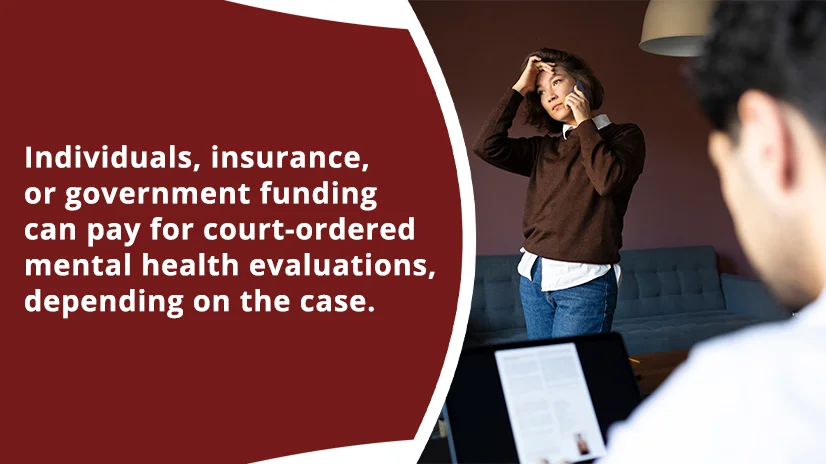
Court-ordered evaluations can be expensive, often ranging from several hundred to several thousand dollars depending on complexity. In criminal cases, costs are sometimes covered by the court or public defender’s office. In civil matters, the court may order one or both parties to pay.
The duration varies widely. Simple competency evaluations might be completed in a few hours, while complex custody evaluations can span several weeks with multiple sessions. Reports are typically completed within two to four weeks after the final session, though urgent cases may receive expedited attention.
Moving Forward After the Evaluation
Regardless of the outcome, understanding the results and their implications is crucial. Work closely with your attorney to interpret the findings and develop an appropriate legal strategy. If the evaluation identifies mental health concerns, consider following through with recommended treatment, even if not legally required. Demonstrating a commitment to addressing mental health issues can positively influence legal proceedings.
Remember that an evaluation is a snapshot of your mental state at a particular time. With proper treatment and support, mental health conditions can improve, and circumstances can change.
Frequently Asked Questions
Can I refuse a court-ordered mental health evaluation?
No, you generally cannot refuse a court-ordered evaluation without facing legal consequences. Refusal can result in contempt of court charges, default judgments against you, or unfavorable assumptions about your mental state. If you have concerns about the evaluation, discuss them with your attorney rather than refusing to participate.
How long does a court-ordered mental health evaluation take?
The duration varies depending on the type and complexity of the evaluation. A basic competency evaluation might take three to five hours, while comprehensive custody evaluations can involve ten to twenty hours spread across multiple sessions over several weeks. The evaluator may also need additional time to review records and write the report.
What questions will I be asked during the evaluation?
Questions typically cover your personal and family history, education and employment, mental health history and current symptoms, substance use, relationships and social support, medical conditions and medications, and the specific circumstances related to the legal case. In criminal cases, you may be asked about the alleged offense. For custody evaluations, expect detailed questions about your parenting and relationship with your children.
Will the evaluator’s report be confidential?
No, court-ordered evaluation reports are not confidential in the traditional therapeutic sense. The report will be shared with the court, attorneys on both sides of the case, and potentially other relevant parties. The report becomes part of the court record and may be discussed in open court proceedings.
Can I bring someone with me to the evaluation?
Generally, the clinical interview and testing portions must be conducted one-on-one with the evaluator. However, you may bring someone to wait for you. In some cases, your attorney may arrange to be present or may request to observe certain portions of the evaluation, though this varies by jurisdiction and case type.
What if I have a diagnosed mental illness? Will that automatically count against me?
Having a mental illness does not automatically lead to negative outcomes. Courts recognize that many people with mental health conditions function well with proper treatment. What matters most is how your condition affects the specific legal issues at hand, whether you’re managing your condition appropriately, your insight into your mental health needs, and your willingness to follow treatment recommendations.
How much does a court-ordered mental health evaluation cost?
Costs typically range from $1,500 to $5,000 or more, depending on the evaluation’s complexity and the evaluator’s fees. Simple evaluations are less expensive, while comprehensive assessments involving multiple sessions, extensive testing, and collateral interviews cost more. In criminal cases, the court or public defender may cover costs. In civil cases, the judge typically decides who pays.
Can I get a second opinion if I disagree with the evaluation?
Yes, you can often obtain an independent evaluation from a different qualified professional. Your attorney can help arrange this and present the alternative findings to the court. However, obtaining a second evaluation requires additional time and expense, and courts may give more weight to their originally ordered evaluation.
What happens if the evaluation finds me incompetent to stand trial?
If found incompetent to stand trial, criminal proceedings are typically suspended. You may be ordered to receive treatment aimed at restoring competency, often in a psychiatric facility. Once competency is restored, the criminal case proceeds. In some jurisdictions, if competency cannot be restored within a reasonable time, charges may be dismissed or alternative dispositions pursued.
How can I prepare to present myself accurately during the evaluation?
Be honest and straightforward in your responses. Bring a list of all medications and treating providers. Prepare a timeline of relevant events. Get adequate sleep before the evaluation. Avoid alcohol and non-prescribed substances. Arrive on time and dress appropriately. Ask for clarification if you don’t understand a question. Take your time answering rather than rushing. Most importantly, don’t try to present a false image—experienced evaluators can detect inconsistencies that may harm your credibility.
What credentials should the evaluator have?
Court-ordered mental health evaluations should be conducted by licensed mental health professionals with specialized forensic training. Look for a PhD or PsyD in psychology, or an MD with psychiatry specialization. They should have specific training or board certification in forensic psychology or psychiatry, experience conducting evaluations for legal purposes, and familiarity with relevant legal standards. Your attorney can verify that the court-appointed evaluator has appropriate qualifications.
Will I receive a copy of the evaluation report?
Typically, yes. Your attorney will receive a copy of the report and should share it with you. In some jurisdictions, you may need to formally request a copy through your attorney or the court. The report is part of the legal record in your case, so you have a right to review it and understand its contents and implications for your legal proceedings.
Leave a Reply